
How to Prevent Clothing Dye Transfer on Silicone and TPE Dolls: 7 Proven Steps
DCSEXY DOLL CARE GUIDE Preve…
Beginner Friendly
Cleaning Guide
Doll Maintenance
Sex Doll Care
DCSEXY DOLL CARE GUIDE Preve…
Prevent Clothing Dye Transfer on Dolls
Seven proven steps for protecting silicone and TPE surfaces before dressing, during wear, and after storage.
Browse the DCSEXY CollectionDark clothing can transform a realistic doll, but black, navy, burgundy, red, purple, and denim fabrics may leave difficult marks. To prevent clothing dye transfer on dolls, treat every dark garment as untested until it has been washed, dried, and checked with white cotton and a material sample.
TPE generally requires more caution because its softer surface can retain pigment. Silicone is usually more stain-resistant but is not stain-proof. Moisture, heat, pressure, friction, and prolonged contact raise the risk for both materials.
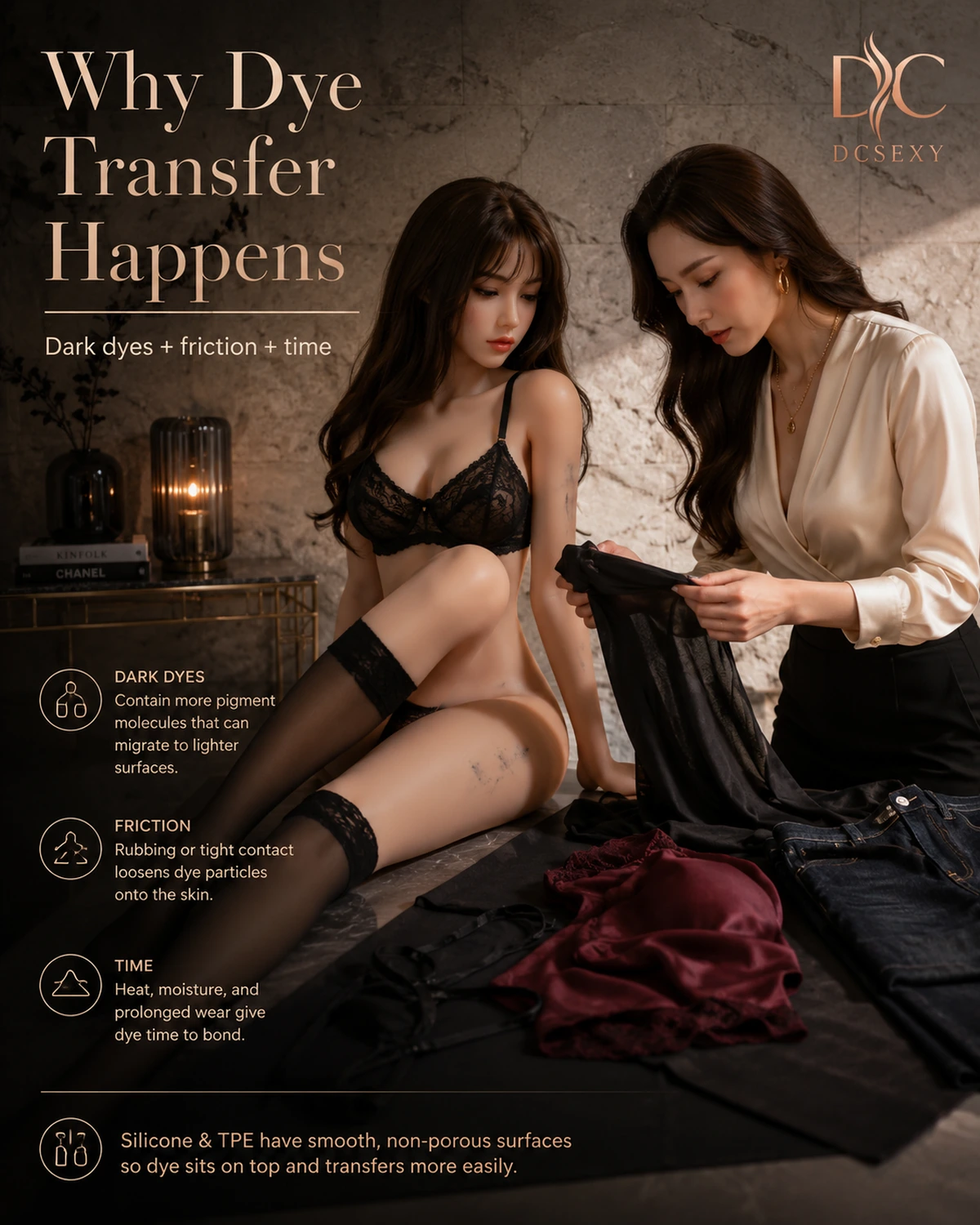
Dye transfer occurs when loose pigment moves from fabric onto the doll. A garment may release little color during washing yet still transfer pigment through rubbing. Tight seams, waistbands, stockings, gloves, wig caps, and dark denim create concentrated pressure.
Damp skin or clothing increases the risk further. Light skin tones also make early discoloration easier to see. Price and fabric name are not reliable guarantees, which is why testing remains the best way to prevent clothing dye transfer on dolls.
Textile laboratories evaluate colorfastness against washing and rubbing. See the Intertek colorfastness overview for general background.
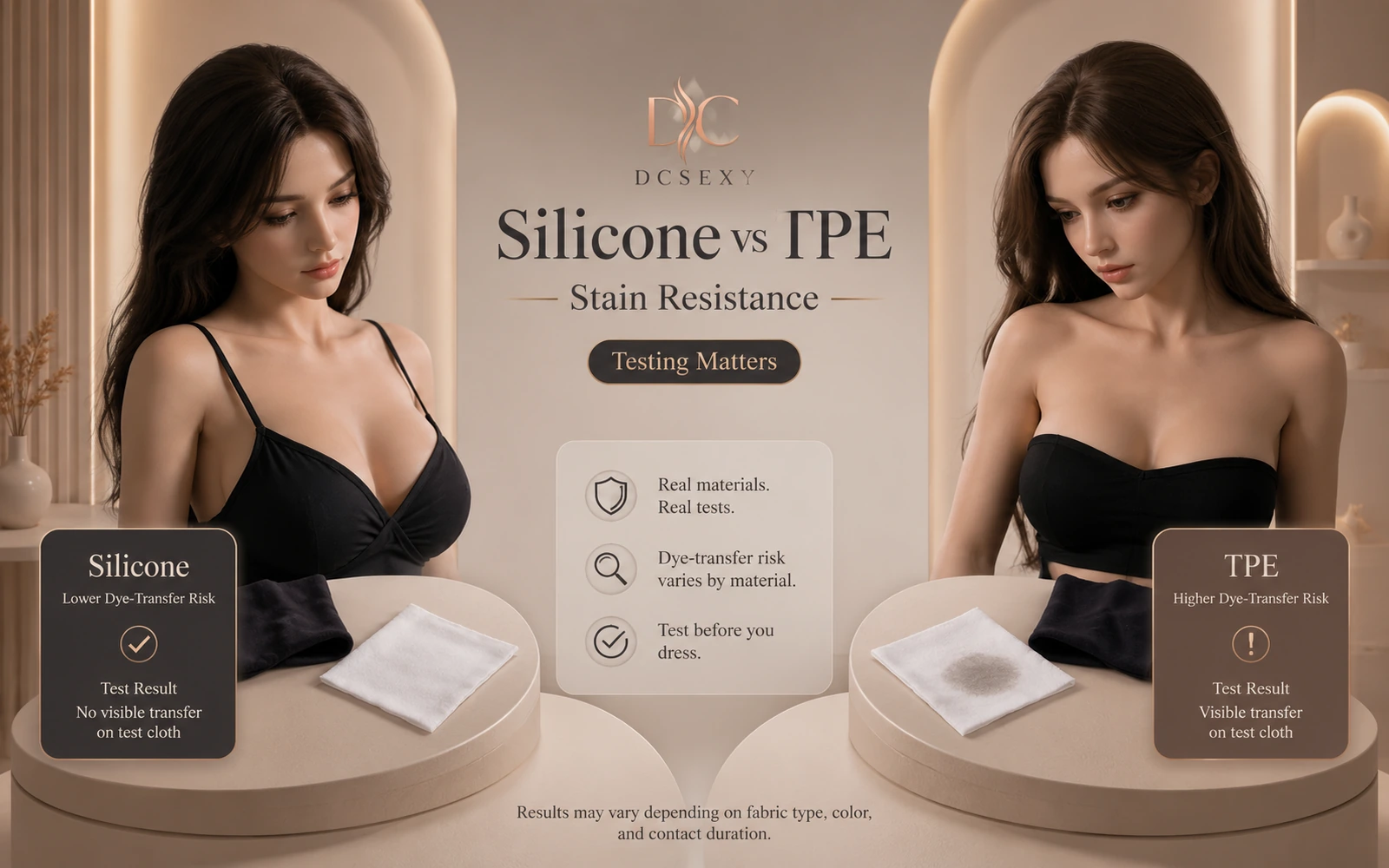
Silicone usually offers better stain resistance, but poorly colorfast dark fabric can still leave marks under pressure or prolonged contact.
TPE is normally higher risk because its softer surface can hold pigment when warm, damp, or compressed by tight clothing.
Material formula, skin finish, garment dye, pressure, and contact time affect the result. To prevent clothing dye transfer on dolls, test the actual garment instead of judging it by price or fabric name.

White, ivory, beige, and pale pink are safer for regular wear and storage. Reserve dark clothing for short display or photography sessions.
Follow the garment label, rinse thoroughly, and dry completely. Prewashing removes loose dye but does not prove rubbing colorfastness.
Rub an inside seam with dry white cotton, then repeat using another cloth that is only slightly damp.
Press or rub the garment against a silicone or TPE sample and inspect it under neutral light.
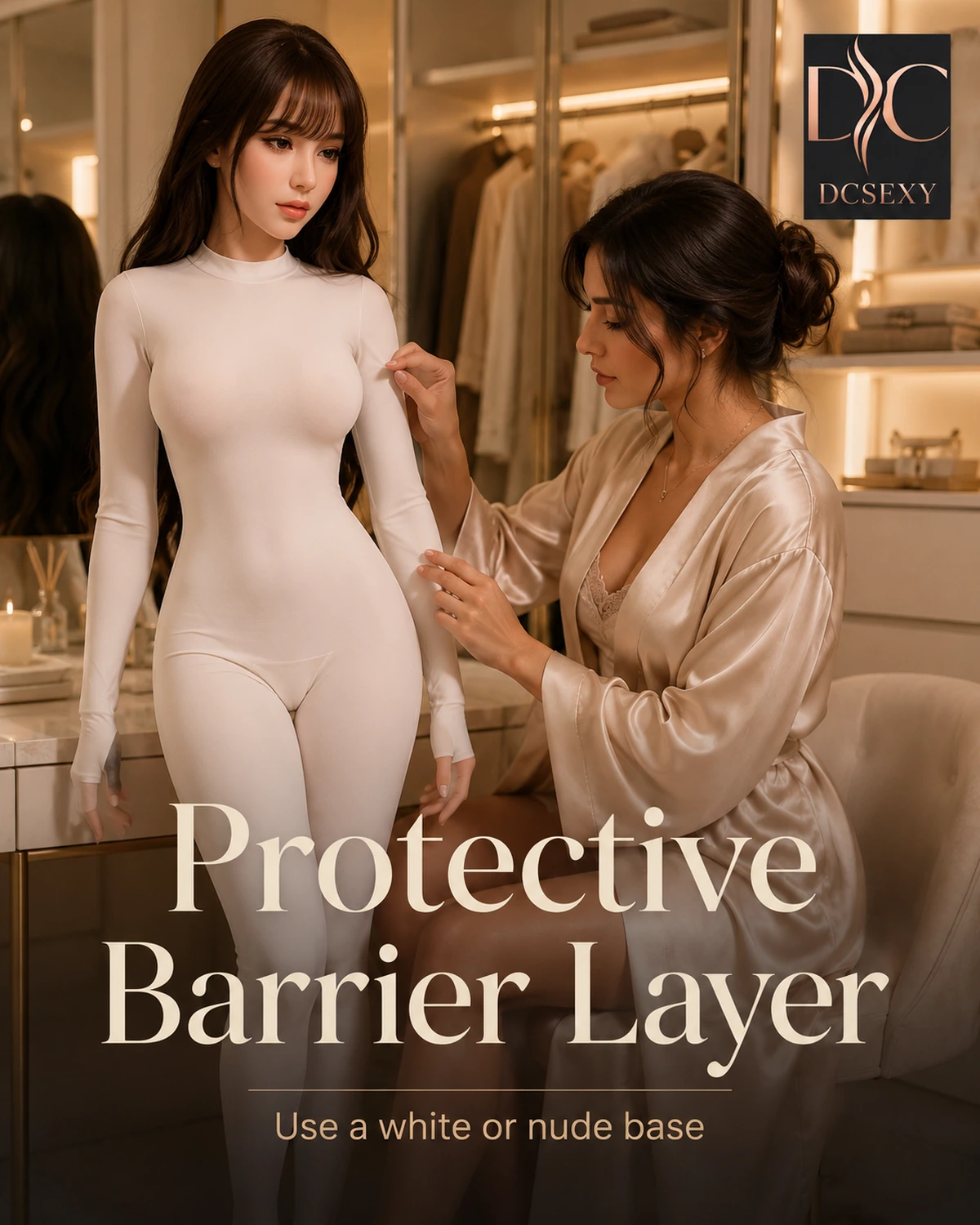
Use a clean white or nude bodysuit, underwear, socks, gloves, body stocking, or thin cotton liner.
Do not dress the doll immediately after cleaning. Allow hidden areas and the garment to dry fully.
Check pressure areas shortly after dressing, remove dark outfits after use, and never leave an untested garment on overnight.
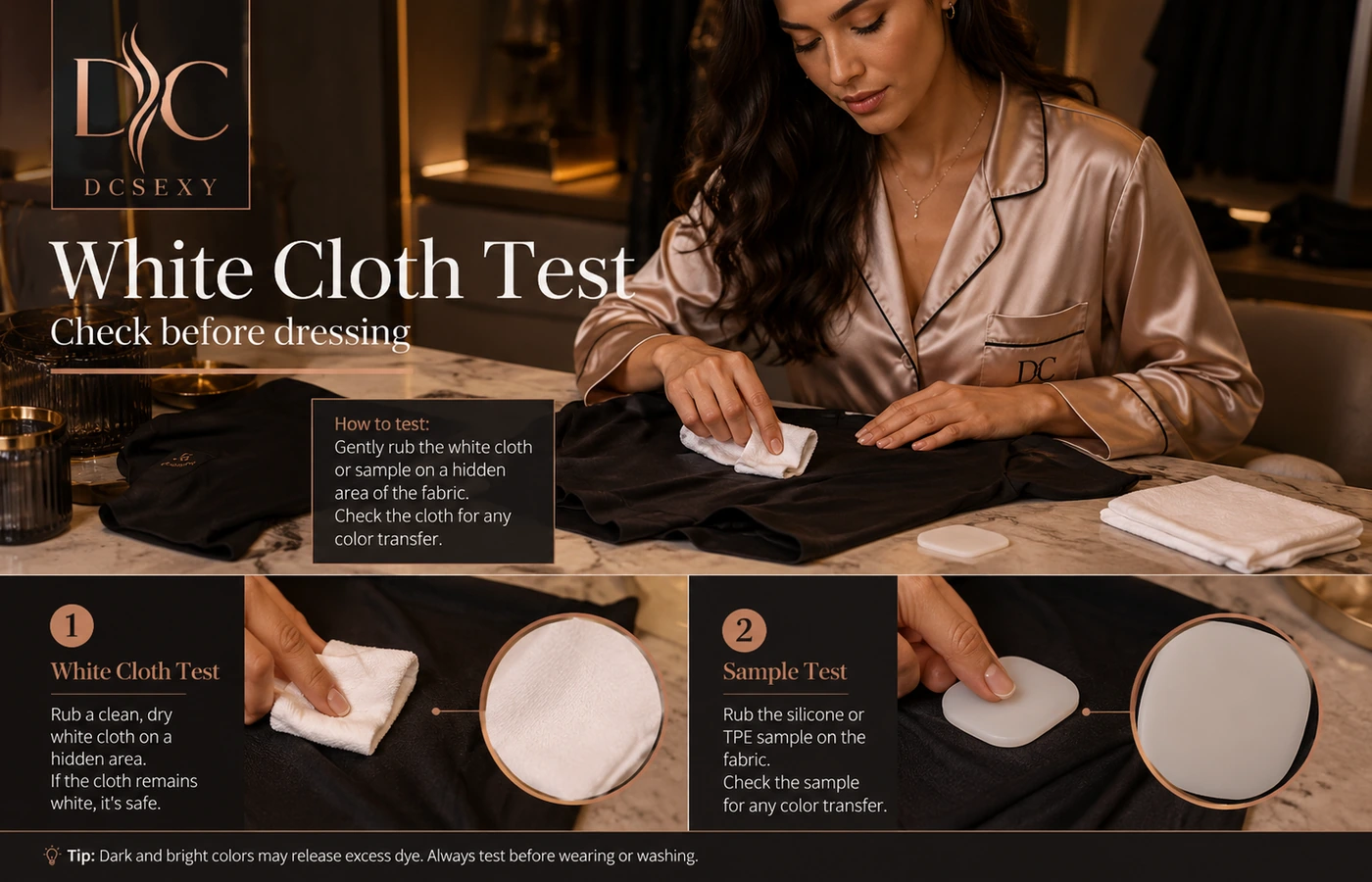
Rub a hidden seam with clean, dry white cotton. Repeat with another cloth that is slightly damp. If either cloth shows color, do not place the garment directly against the doll.
Press or rub the fabric against a silicone or TPE sample. Leave it for a short controlled period and inspect the sample under neutral light.
For black, navy, burgundy, red, purple, or denim clothing, wash, dry, test, add a barrier, and inspect early. This routine helps prevent clothing dye transfer on dolls without eliminating dark styling.
A colorfast bodysuit reduces direct contact with dark fabric. It should be clean, dry, light-colored, soft, free from dark stitching, and not excessively tight.
Wash and test the barrier garment before use, even when it is white. A barrier reduces risk but cannot guarantee complete protection because pigment may migrate through thin fabric under moisture or pressure.
Inspect the neck, shoulders, waist, hips, inner thighs, hands, and feet. These pressure areas receive the most contact from seams and elastic. Regular checks help prevent clothing dye transfer on dolls from becoming a deeper stain.
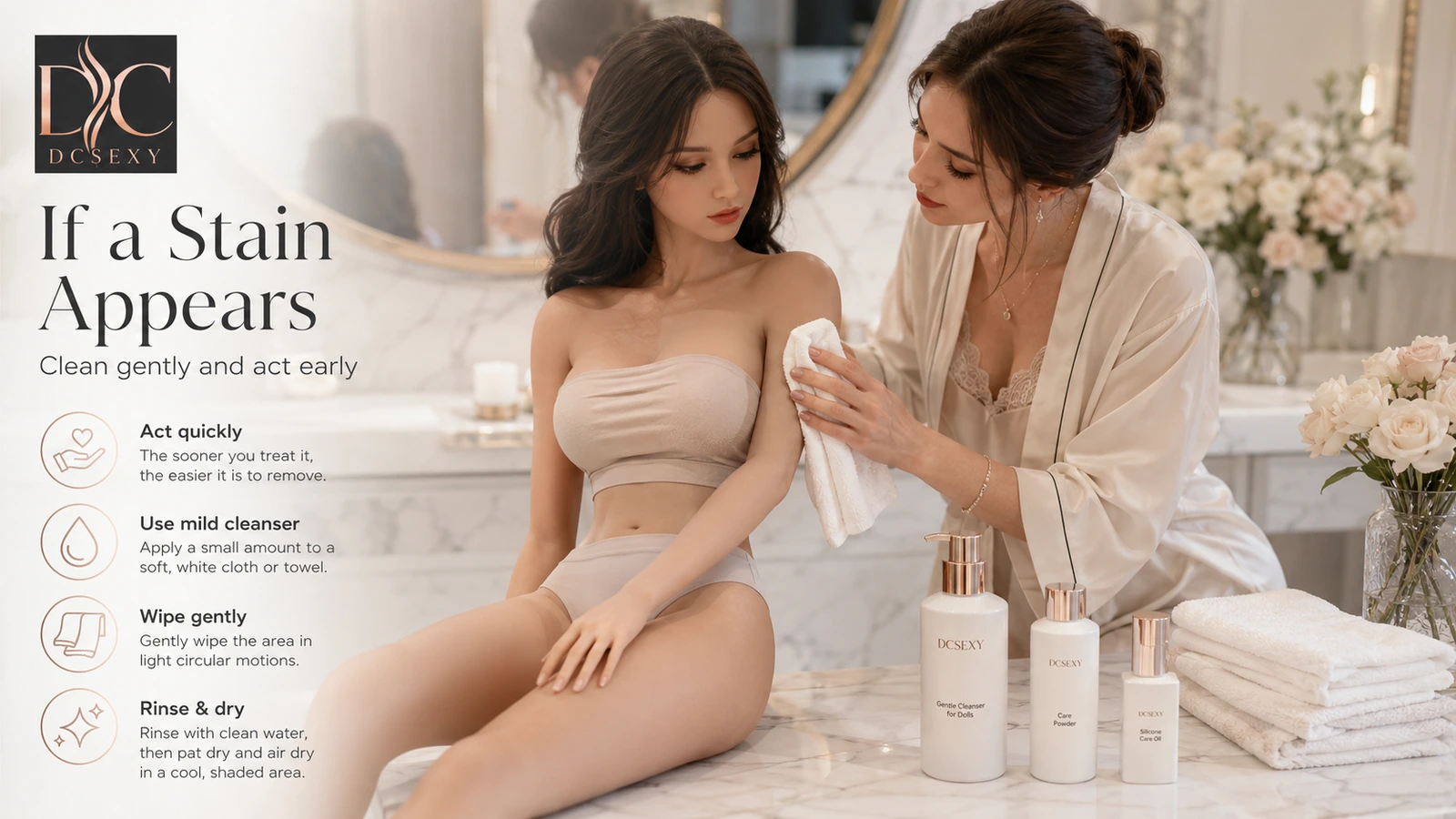
Do not use bleach, acetone, strong alcohol, abrasive brushes, household stain removers, or peroxide products unless the manufacturer approves them for the exact material. Product-specific guidance is safer than a method intended for another polymer.
For general cleaning context, the CDC cleaning and disinfecting guidance explains that soap and water are suitable for routine cleaning in many situations. Always prioritize the care instructions supplied for the doll’s specific material.
The best answer to How to Prevent Clothing Dye Transfer on Silicone and TPE Dolls is to use light clothing for storage, prewash new garments, test every dark outfit, add a protective layer, and inspect the skin regularly.
No outfit is guaranteed safe because it is expensive or washed once. A repeatable routine to prevent clothing dye transfer on dolls protects the finish and supports confident styling.
Compare Available DCSEXY ModelsYes, but the garment should be washed, tested, worn over a light barrier, and used for a limited period. Silicone is more stain-resistant than TPE but is not immune.
No. Washing removes some loose dye, while rubbing, moisture, pressure, and prolonged contact may still cause pigment transfer.
White, ivory, beige, pale pink, and other light, colorfast fabrics are generally safer. Every new garment should still be washed and tested.
It is safer than dark clothing, but remove it periodically to inspect the skin, clean the doll, and reduce pressure from seams and elastic.
There is no universal time limit. Poorly dyed fabric may transfer quickly, so inspect early and never leave untested dark clothing on overnight.
Use only mild products approved for the exact material. Contact the seller before applying strong chemicals or unverified home remedies.

Compare materials, sizes, and configurations while planning a clothing, storage, and care routine that fits your ownership needs.
Explore the CollectionEditorial Transparency
How this guide was created and reviewed
Explore more guides in the Sex Doll Care & Maintenance cluster.
Sex Doll Care & Maintenance
Sex Doll Care & Maintenance
Sex Doll Care & Maintenance




Browse premium companion dolls with discreet worldwide shipping and expert support.
